
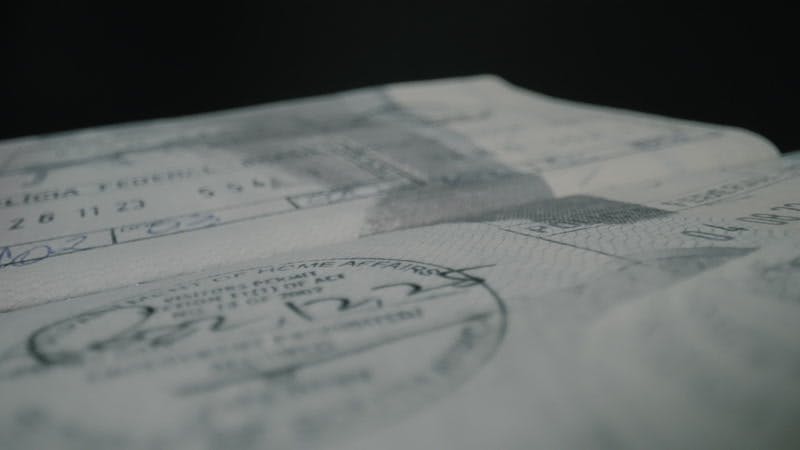
Why HR and legal teams underestimate authentication
International hires arrive on a project plan that almost always treats the visa as the document item. Visa lead time gets a row. Visa cost gets a row. Visa renewal dates get a row. Document authentication, when it appears at all, usually shows up as a single line near the bottom, sometimes phrased as 'apostille if needed.'
That phrasing is where most timeline problems begin. Apostille is not a small administrative step bolted onto an international move. It is its own process, with its own offices, its own queues, and its own rules about which version of a document is acceptable. A diploma, a background check, an articles of incorporation, a power of attorney, a marriage certificate, all of these may need to be authenticated for a foreign government or institution to accept them. None of them can be rushed at the airport.
The most common version of this story in practice: a new international hire's start date is set, the visa is in motion, the relocation package is ready, and three weeks before the move the destination country requests an apostilled diploma. The diploma is in the new hire's hands at home. Getting the apostille involves a sequence of offices. Each office takes its time. The start date slips, the relocation slips, and the rest of the team learns a word they had never heard before.
The fix is not faster expediting at the end. It is recognizing that authentication is a category of work that deserves its own row on the plan, started early.
The Apostille chain in plain terms
Once a document is identified as needing authentication, the next question is which version of the chain applies. There are two main paths, and the destination country decides which one.
For destinations inside the Hague Apostille Convention, the path is the Apostille. A U.S. document is generally certified at the state level for state-issued documents, or at the federal level for federally issued documents, and that single Apostille certification is recognized by every other Hague Convention country without further consular involvement. The chain is short, the process is well defined, and the timeline is mostly a function of which state-level office is involved and how busy it is.
For destinations outside the Hague system, the same document moves through additional consular legalization. After the state or federal certification, the document then goes to the destination country's embassy or consulate in the United States for a final stamp. Each consulate has its own intake rules, its own pace, and sometimes its own translation or notarization requirements layered on top.
The document type also matters. A vital record like a birth certificate generally follows one path. A diploma or transcript may require an extra notarization or registrar verification first. A corporate document like a board resolution or articles of incorporation usually needs notarization, then state certification, then federal certification, then possibly consular legalization. The chain that fits one document does not automatically fit another. The catch is that none of this is intuitive from outside the work.
How to keep authentication off the critical path
For HR, mobility, and legal operations teams that handle international hires or cross-border deals more than once a year, a few habits keep this work from derailing the calendar.
First, ask the right question at the start of any international move or deal. Not 'do we need an apostille,' which is too narrow, but 'which U.S. documents will this destination need authenticated, and which path applies.' The answer determines the timeline more than any other factor.
Second, treat authentication as its own line on the project plan, with its own owner. Visas have someone in charge. Apostille and legalization should too. If they share an owner with the visa, the visa tends to win attention and authentication tends to lose it.
Third, gather the right form of each document early. Many authentication delays trace back to a document version that is not acceptable: a copy where the original is required, a notarization with a missing detail, a certificate older than the consulate will accept. Catching this in week one is an errand. Catching it in week ten is a problem.
Fourth, build the relationship with a specialist before there is a crisis. APVI has handled Apostille and full legalization since 2003. We are registered with the U.S. Department of State and more than 90 foreign embassies, which are the offices this chain runs through. If your team has international hires landing this quarter, cross-border deals in flight, or a future expansion on the radar, call us at (800) 766-0452 before the calendar tightens. The earlier the chain is mapped, the calmer it stays.